










For over a century, if you wanted to become the best chess player in the world, you eventually had to go through Russia. Not just through its players—through its training halls, its tournaments, its books, and its relentless belief that chess was something worth mastering.
No other country has produced so many world champions. No other country has treated the game so seriously, weaving it into the fabric of education and national pride. From the final days of the Russian Empire through the Soviet experiment and into the modern era, Russian players haven’t just participated in chess history—they’ve written most of it.
This isn’t just a list of champions. It’s the story of how a nation decided that chess mattered, and what happened when that decision played out across generations.
Before the Dynasty: Chess Finds a Home
Chess arrived in Russia centuries ago, probably through trade routes connecting Europe and Asia. But it wasn’t until the 1800s that the game took root among the Russian intelligentsia. Writers, army officers, and university students gathered in St. Petersburg cafes, pushing pieces across boards and arguing about openings.
Then came 1917. The Revolution changed everything, including chess.
The new Soviet government made a curious calculation: chess taught logical thinking, patience, and discipline. These were exactly the qualities they wanted in their idealized citizens. So they built a system. Chess clubs opened in factories and schools. Children with talent were identified early and trained seriously. The state sponsored tournaments, published magazines, and treated grandmasters as national assets.
What emerged became known as the **Soviet Chess School**—though it wasn’t really a school with classrooms. It was more like a nationwide commitment to excellence, and it worked beyond anyone’s expectations.
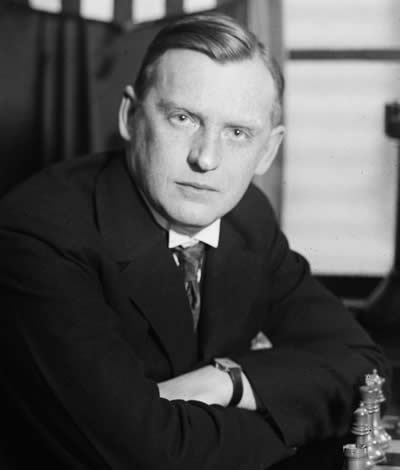
Alexander Alekhine: The Original Genius
Before the Soviets built their machine, there was Alexander Alekhine. Born in 1892, he learned chess from his mother and older brother. By his twenties, he was already terrifying opponents with attacks that seemed to come from nowhere.
Alekhine played chess the way a jazz musician improvises—willing to take risks, trusting that he could find the right notes in the chaos. He sacrificed pieces freely, creating complications that baffled his opponents. His games look reckless until you realize he’d calculated everything ten moves ahead.
After fleeing Russia following the Revolution, Alekhine eventually became World Champion in 1927 by defeating the legendary Jose Raul Capablanca—a player many considered unbeatable. He held the title, with one interruption, until his death in 1946.
His body was found in a hotel room in Portugal, still dressed, with a chess set nearby. The circumstances were never fully explained, but by then Alekhine had already secured his place as the founding father of Russian chess greatness.
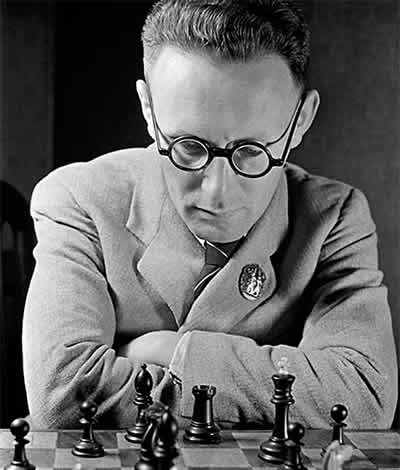
Mikhail Botvinnik: The Engineer of Victory
If Alekhine was the artist, Mikhail Botvinnik was the scientist. When he became World Champion in 1948, he brought a new approach to the game: chess as research.
Botvinnik prepared for tournaments the way a physicist prepares for an experiment. He analyzed his own games obsessively, cataloging mistakes and refining his understanding. He studied openings in depth, looking for small advantages others missed. When he lost, he didn’t just move on—he dissected the loss until he understood exactly what went wrong.
But Botvinnik’s greatest contribution wasn’t his championship titles. It was his school.
In the 1960s and 70s, he began training young talents, and his students read like a who’s who of chess history: Anatoly Karpov, Garry Kasparov, Vladimir Kramnik. He taught them to think systematically, to respect preparation, and to treat chess as something worthy of serious intellectual effort. Every Russian champion who came after him walked through a door Botvinnik helped open.
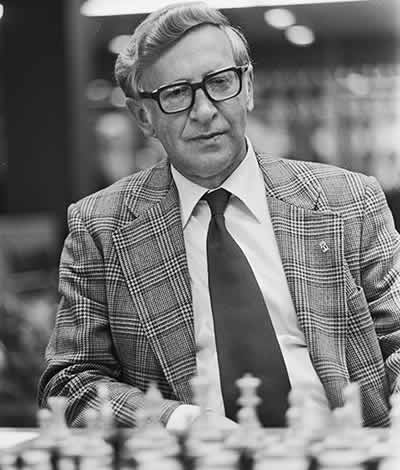
Vasily Smyslov: The Quiet Artist
When Vasily Smyslov became World Champion in 1957, people noticed something unusual about his games. They looked… simple. His moves seemed obvious, almost boring. And then, somehow, his opponents would find themselves in losing positions without understanding how they got there.
Smyslov believed the best move was usually the most natural one. He didn’t chase complications or force attacks. He just improved his position patiently, waiting for his opponent to crack under the pressure of perfect play.
Off the board, Smyslov was an opera singer with a fine baritone voice. He once had to choose between chess and music as a career. Chess won, but music never left him. People who knew him said his games had a musical quality—balanced, harmonious, with nothing wasted.
He lived to 89, playing chess almost to the end. In his final years, he’d tell young players that beauty in chess came from clarity, not confusion.
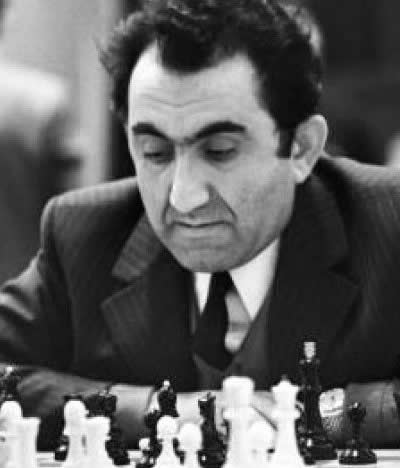
Tigran Petrosian: The Man You Couldn’t Beat
Tigran Petrosian, World Champion from 1963 to 1969, played chess like a goalkeeper who never let the ball reach the net. His genius was prevention.
While other players looked for ways to attack, Petrosian looked for ways to stop attacks before they started. He’d make quiet moves that seemed to do nothing—until you realized they’d blocked every dangerous idea his opponent might have had. Trying to beat him was like punching smoke.
His style wasn’t flashy, but it was incredibly effective. Between 1962 and 1966, he lost only five games out of 128. Five losses in four years against the best players in the world.
Modern grandmasters still study Petrosian’s games to understand prophylaxis—the art of anticipating and neutralizing threats.
He showed that the best way to win was sometimes to make sure you couldn’t lose.
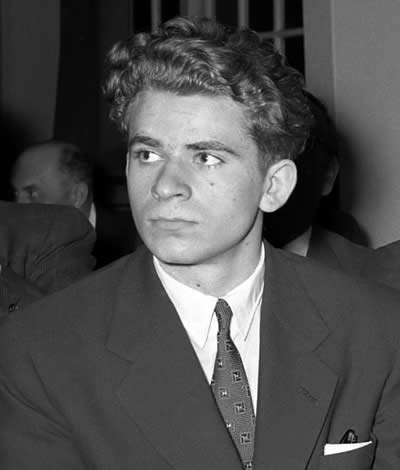
Boris Spassky: The Complete Package
By the time Boris Spassky became World Champion in 1969, he’d developed something rare: versatility. He could attack like Alekhine, maneuver like Smyslov, or defend like Petrosian, depending on what the position required. Opponents found him nearly impossible to prepare for because they never knew which Spassky would show up.
Then came 1972, and everything changed.
The match against Bobby Fischer in Reykjavik wasn’t just a chess tournament. It was a Cold War confrontation played out on 64 squares. The American challenger’s demands and tantrums made headlines worldwide. The Soviet establishment pressured Spassky. The media framed every game as East versus West.
Spassky lost the match, and the Soviet grip on the world championship finally broke. But he handled the defeat with a grace that impressed everyone. When Fischer later faded from public view, Spassky spoke of him with respect, not bitterness.
He remained a beloved figure in the chess world—proof that you could lose the biggest match of your life and still be remembered as a champion.
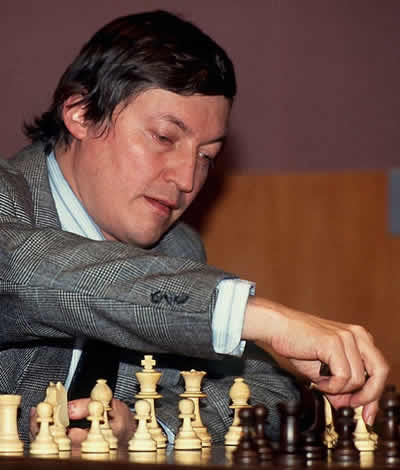
Anatoly Karpov: The Slow Squeeze
After Fischer refused to defend his title, Anatoly Karpov became World Champion in 1975 by default. Some questioned whether he deserved it. By the time he finished playing, nobody doubted anything.
Karpov won tournaments constantly. He held the championship for ten years, defending it multiple times. His style was suffocating: he’d build small advantages, squeeze his opponents gradually, and never let them breathe. His games lacked the fireworks of Alekhine or the drama of Spassky-Fischer, but they had something else—inevitability. Watching Karpov play, you got the sense that the outcome was already determined; you were just waiting to see when his opponent would realize it.
His rivalry with Garry Kasparov produced some of the most intense matches in chess history. They played five world championship matches between 1984 and 1990, grinding through hundreds of games. Karpov lost the title in 1985 but kept competing at the highest level for another two decades.
He once said, “I don’t need to see the whole staircase. I just take the first step.” Against Karpov, that first step was usually enough.
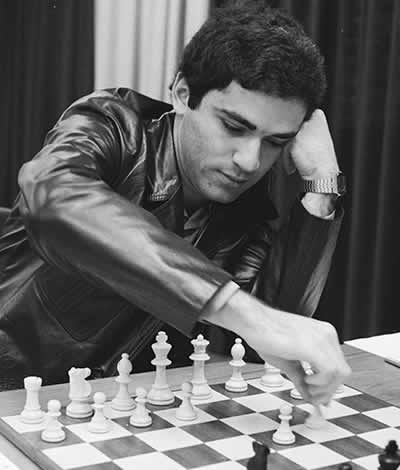
Garry Kasparov: The Lion
If Karpov squeezed opponents to death, Garry Kasparov knocked them out. His games were aggressive, ambitious, and unforgettable.
Kasparov became World Champion in 1985 at age 22, the youngest in history. He held the title for 15 years and stayed ranked number one in the world for 20 years—longer than anyone ever. His preparation revolutionized the game. He’d show up with novelties in well-known openings, ideas that had never occurred to anyone else. Then he’d attack with such ferocity that opponents crumbled.
His matches against Karpov defined an era. They played 144 competitive games against each other. Kasparov eventually pulled ahead, but the rivalry pushed both players to new heights.
In 1997, Kasparov played IBM’s Deep Blue computer and lost. The match became a symbol of humanity versus machines, and Kasparov handled the attention with characteristic intensity. He suspected IBM of cheating (later investigations suggested he might have been right about some irregularities). More importantly, the match announced to the world that chess would never be the same.
After retiring from professional chess, Kasparov became a political activist in Russia, opposing Vladimir Putin and eventually living in exile. But on the chessboard, his legacy is secure: he changed how the game is played.
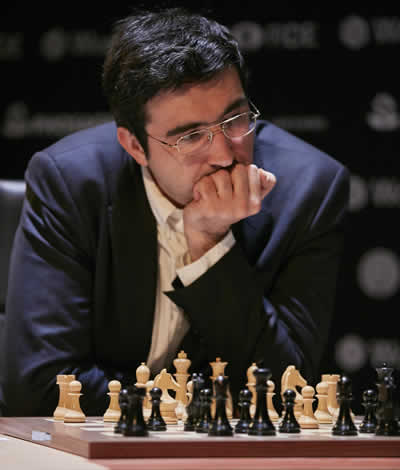
Vladimir Kramnik: The Bridge Between Eras
When Vladimir Kramnik defeated Kasparov for the world championship in 2000, it felt like a changing of the guard. Kasparov had dominated so completely that many couldn’t imagine anyone beating him.
Kramnik did it by refusing to fight Kasparov’s battles. Instead of sharp, tactical struggles, he steered the match into quiet positional waters. He out-prepared the best preparer in history. He out-thought the greatest thinker the game had seen.
Kramnik’s style was classical—patient, deep, built on understanding rather than calculation. He helped restore the reputation of positional chess at a time when computers were making tactics more important than ever. He also unified the world championship titles, ending a messy period when rival organizations claimed different champions.
In an interview years later, Kramnik said simply: “I wanted to prove that human chess still mattered.” He did.
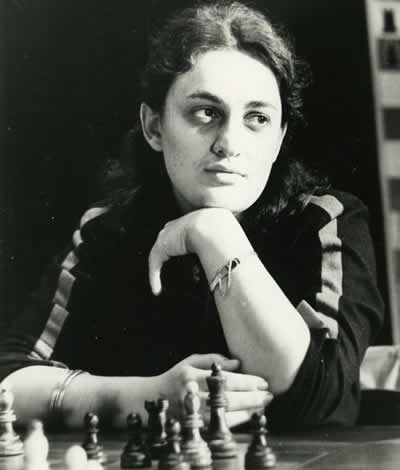
The Queens of the Russian Board
And woven into this remarkable lineage are the achievements of Russia’s women champions, who have carved out their own legendary space within this chess-obsessed culture. Long before the women’s world championship was formally established, Russian women were formidable players, but the Soviet system’s commitment to excellence extended to them as well. Players like Elisaveta Bykova, a three-time Women’s World Champion in the 1950s, and Olga Rubtsova, who also held the title, demonstrated the same deep strategic understanding celebrated in their male counterparts.
This tradition exploded into global prominence with Nona Gaprindashvili, the first woman to be awarded the Grandmaster title, who dominated the women’s game for decades and famously competed against top male grandmasters. She was succeeded by another Georgian powerhouse, Maya Chiburdanidze, who became Women’s World Champion at just 17. In the modern era, players like Alexandra Kosteniuk and Aleksandra Goryachkina have carried the torch, proving that Russia’s mastery of the game has never been confined by gender.
They are not a footnote to the story of Russian chess, but an integral part of its relentless claim to the board.
The New Generation
Russia still produces world-class players. Peter Svidler, a six-time national champion and famously witty commentator, has been a top grandmaster for decades. Sergey Karjakin qualified for the world championship match in 2016, narrowly losing to Magnus Carlsen. Ian Nepomniachtchi played for the title in 2021 and 2023.
Still, walk into any chess club in Moscow or St. Petersburg, and you’ll see kids studying games from a century ago. They know Alekhine’s combinations, Botvinnik’s endgames, Tal’s sacrifices. The tradition continues, even if the results are less predictable.
Why Russia? Why Chess?
Russia developed a culture where chess mattered. Grandmasters were celebrities. Matches were news. Parents wanted their children to learn the game because it represented intelligence and discipline—qualities that Russians, across generations, have genuinely admired.
There was also the competition. When every tournament includes multiple world-class players, you either improve or you disappear. Soviet players pushed each other constantly, and that internal pressure created excellence.
Finally, there were the teachers. Botvinnik trained Karpov. Karpov inspired Kasparov. Kasparov challenged everyone. Each generation handed something to the next—knowledge, yes, but also a sense that chess was worth taking seriously.
Key points
Who is the "most Russian" chess player?
While subjective, Boris Spassky is often considered the quintessential Russian chess player. Other contenders include Mikhail Botvinnik, who essentially created the Russian chess methodology, and Anatoly Karpov, whose slow-grinding style reflected the Soviet approach to strategic dominance.
Why are Russian players so dominant in chess history?
Russia's dominance stems from a century of state-sponsored support beginning in the Soviet era, where chess was treated as a national priority. The government funded clubs, schools, and tournaments, treating grandmasters as national assets and weaving the game into the fabric of education and culture.
What was the "Soviet Chess School"?
It wasn't a physical school but a nationwide commitment to rigorous training and systematic study. It emphasized treating chess as a sport requiring preparation, physical fitness, and deep analysis, rather than just art or science—a method pioneered by world champion Mikhail Botvinnik.
Who are the most famous Russian women world champions?
The legacy includes multiple Women's World Champions such as Elisaveta Bykova, Olga Rubtsova, and Georgian-born legends Nona Gaprindashvili (first female Grandmaster) and Maya Chiburdanidze. In the modern era, players like Alexandra Kosteniuk have continued this tradition.
Does Russia still produce top chess talent today?
Absolutely. While the era of total dominance has passed with the fall of the USSR, Russia continues to produce elite grandmasters like Ian Nepomniachtchi (World Championship challenger in 2021 and 2023), Sergey Karjakin, and Peter Svidler.
Read also: The Dawn of the Cosmic Age


